
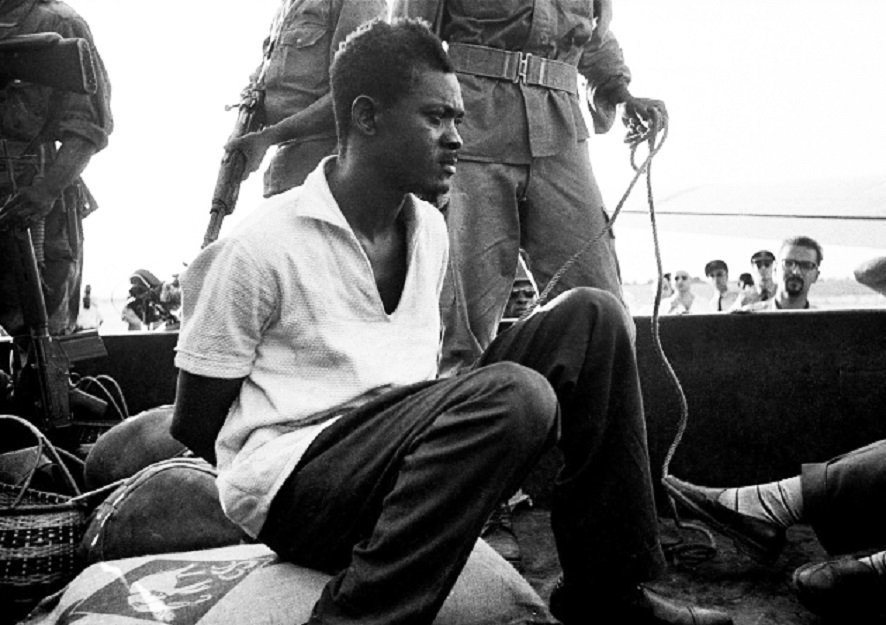
Judges at the Brussels Criminal Court’s Council Chamber on Tuesday, January 20th, 2026, heard the legal defense of Etienne Davignon, a 93-year-old ex-diplomat who is defending himself in Brussels over his alleged role in the 1961 killing of Congolese leader Patrice Lumumba.
This comes 65 years after the murder of the iconic Congolese leader.
Lumumba fought for the Congo’s liberation from Belgian colonial rule and he remains a symbol for speaking out against injustice and highlighting the violence and humiliations of Belgian rule. Reports indicate that he was tortured, shot and mutilated because of his beliefs, and his body was then dissolved in an acid bath.
Etienne Davignon, the man on trial for the said act, is the only suspect in the crime who is still alive. He was one of 10 Belgian officials named in a 2011 complaint filed by the family of Patrice Lumumba. This led Belgian prosecutors to investigate the assassination of the Democratic Republic of Congo’s first democratically elected prime minister. After years of protracted investigations, Belgian prosecutors asked for the case to be sent to Brussels criminal court in June 2025, citing Davignon’s suspected role in war crimes committed in Congo.
In 1960, Davignon was sent to the new independent Congo to ‘restore order’ to what was described as the ‘chaos’ of the post-colonial era of the country. He also advised the then-president Joseph Kasavubu on how to lawfully remove Lumumba from office.
Speaking to the news network, DW, Wolfgang Kaleck, general secretary of the European Center for Constitutional and Human Rights (ECCHR), says the assassination of Lumumba “is one of the most damaging political murders of the last century.”
“This kind of violence is committed not only by individuals but also an apparatus. It’s a division of labor, so everybody played his role,” Kaleck told DW. “I have complete comprehension for everybody who argues that Etienne Avignon was young then. But still, he was an elite diplomat, he was amongst the Belgian elites.”
Lumumba was assassinated by a firing squad in 1961 with the tacit backing of former colonial power Belgium. The DR Congo hero’s body was then buried in a shallow grave dug up, transported 200km, interred again, exhumed and then hacked to pieces and finally dissolved in acid.
In 1999, the now late Belgian police commissioner, Gerard Soete, who oversaw and participated in the destruction of the remains, publicly acknowledged his involvement. He was still in possession of Lumumba’s tooth, but confessed that he had got rid of the other body parts. The said took was returned at a ceremony in Brussels in 2022.
One may want to ask the relevance of investigating and prosecuting a crime that happened in 1961. Well, the prosecution of international crimes such as genocide, crimes against humanity and war crimes has no time limit, meaning they cannot expire or be covered by amnesty. This is why cases like the killing of Lumumba can still be investigated decades later.



Leave a Reply